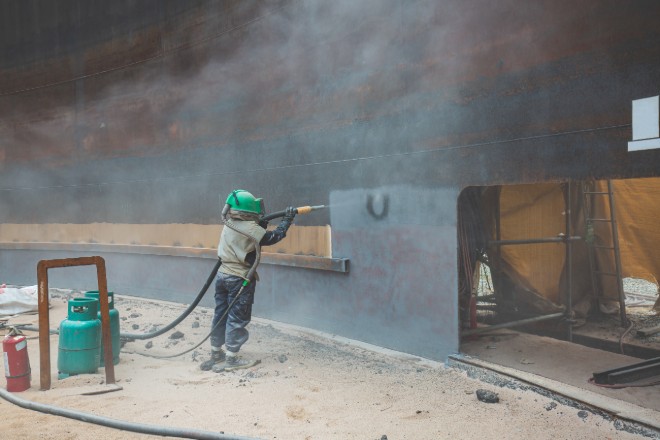
Why Hull Cleaning is Important in the Marine Industry
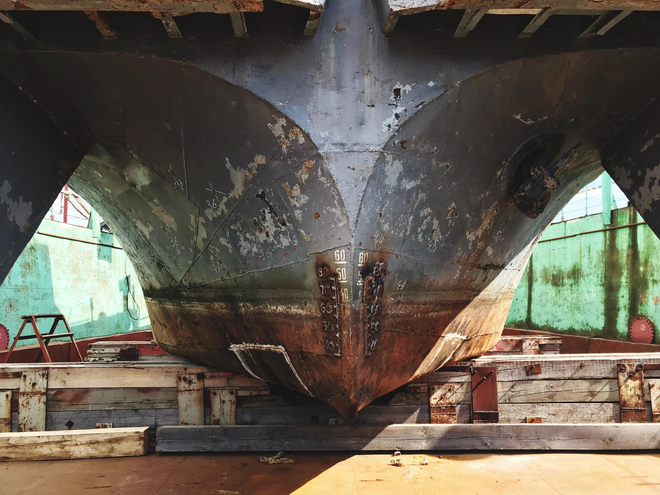
All ocean-going ships encounter an unavoidable problem — marine fouling. Rust, barnacles, algae, and salt deposits, depending on the environment, build up over time, delaying the vessel, creating drag, and increasing fuel efficiency. On top of that, corrosion and biofouling can weaken the structural integrity of the hull, requiring costly maintenance and downtime.
For many years, industries used to depend on abrasives such as slag and silica sand for cleaning surfaces. Today, however, marine maintenance requires cleaner and safer products that adhere to stringent environmental and performance requirements.
That's where Garnet abrasive comes in. Its purity, hardness, and recyclability have made it the go-to abrasive for ship hull cleaning, preparing marine coatings, and rust removal in shipyards around the world.
1. Abrasive Blasting's Role in Ship Hull Maintenance
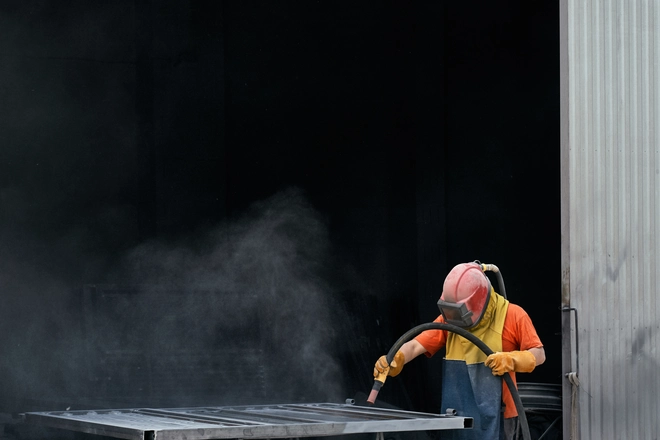
Abrasive blasting, or sandblasting, or grit blasting is the mainstay of marine surface preparation. The objective is straightforward yet fundamental:
- Remove corrosion, coatings, and marine growth.
- Produce the correct surface roughness for paint adhesion.
- Prepare the hull for anti-corrosive coatings and long-term durability.
The success of this process rests mostly on the quality of abrasive material employed. Low-quality abrasives induce contamination, coating failure, and high maintenance costs.
2. Conventional Abrasives: Slag and Silica Sand
Prior to the advent of Garnet, coal slag and silica sand were being largely used for ship blasting. Though they are economical and widely available, they have serious limitations:
- High Dust Generation: Generates visibility and safety risks for workers.
- Health Risks: Silica sand has the potential to cause silicosis — a debilitating lung disease.
- Single-Use Material: Slag and sand disintegrate rapidly, producing waste.
- Inconsistent Performance: Irregular particle size produces uneven cleaning results.
- Contamination Issues: These abrasives' residue is known to generate coating adhesion issues.
With growing environmental regulations and industries moving towards eco-friendly practices, most shipyards have eliminated the use of these legacy materials.
3. Why Garnet Is the Best Abrasive for Ship Hull Cleaning
Garnet has rapidly emerged as the industry benchmark in marine maintenance. Let's dissect why it surpasses slag and sand in each important parameter:
a. Better Corrosion and Coating Removal
The hardness (7.5–8 on the Mohs scale) and angular grain structure of garnet provide a cleaner, quicker cut. It easily removes marine coatings, rust, and salt fouling while creating a uniform surface for paint adhesion and corrosion protection.
b. Uniform Surface Roughness
Garnet creates a uniform anchor pattern, ensuring coatings adhere tightly to the substrate — essential for ship hulls in extreme marine environments.
c. Low Salt Contamination
With very low chloride content, Garnet reduces salt contamination, minimizing coating blistering and corrosion.
d. Reusability and Cost Efficiency
Garnet can be recycled up to 5 times without losing performance, offering reduced consumption and disposal costs.
e. Environmentally Responsible and Safe
Garnet is a toxic-free, natural mineral that produces minimal dust, enhancing visibility and worker safety.
4. Comparative Table: Garnet vs Slag vs Silica Sand
| Parameter | Garnet | Slag | Silica Sand |
|---|---|---|---|
| Cutting Speed | High | Medium | Low |
| Reusability | 4–5 cycles | Single use | Single-use |
| Dust Generation | Very Low | High | Very High |
| Salt Contamination | Minimal | Moderate | High |
| Health Hazards | None | Moderate | Severe (Silicosis) |
| Environmental Impact | Low | High | High |
| Coating Adhesion | Excellent | Average | Poor |
5. Selecting the Most Suitable Garnet Grade for Maritime Use
Your blasting needs determine the appropriate Garnet mesh:
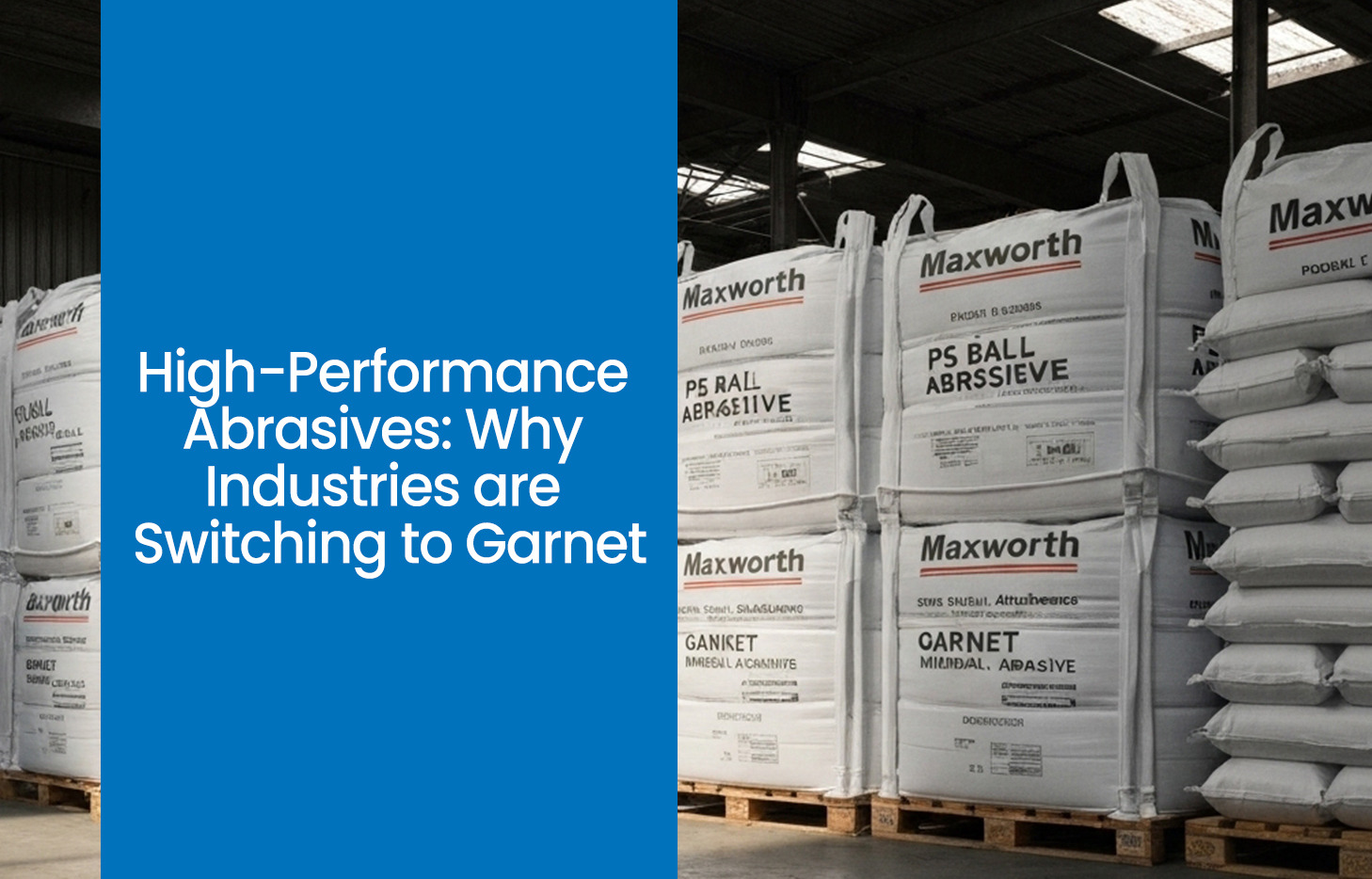
- Maxworth A1 #30/60 Premium : Best for heavy rust and coating removal.
- Maxworth A1 #30/60 Standard: Ideal for surface preparation for coating.
Both grades balances cutting speed, surface profile, and consumption rate.
6. Real-World Impact: Why Shipyards Prefer Garnet
International shipyards and marine contractors have embraced Garnet abrasive blasting for:
- Hull restoration projects
- Dry dock maintenance
- Cargo hold cleaning
- Offshore platform maintenance
By making the change to Garnet, they realize:
- Up to 30% faster cleaning
- 50% less abrasive consumption
- Adherence to global environmental regulations.
Conclusion: Garnet — The Smart Choice for Ship Hull Cleaning and Marine Maintenance
In an industry where success is measured in efficiency, safety, and sustainability, Garnet abrasive excels on all fronts. It provides superior cleaning performance, reduces operational costs, and complies with global environmental laws — making it the best abrasive for ship hull cleaning and marine maintenance.
Whether you’re maintaining a fleet or performing heavy-duty surface preparation, Garnet ensures cleaner results, longer coating life, and a safer workspace.

The right abrasive cleans hulls efficiently, reduces corrosion and…
Nov 24, 2025
Industries are switching to garnet abrasives for superior cutting, eco-friendliness,…
Sep 25, 2025
Garnet abrasive keeps surfaces clean, cuts dust and makes construction…
Sep 23, 2025
Garnet ensures smoother cuts, reduced costs, eco-friendly practices, and high-quality…
Sep 19, 2025
Shipbuilding endures saltwater, humidity, and stress, leading to corrosion. Regular…
Aug 22, 2025